
Inside: Learn from a SPED teacher about Autism, its signs and symptoms , intervention plans, and tried approaches on how to support them in the classroom.
by Ms. Rica M. Rubas, LPT, MAED SpEd
Read Ms. Rica’s interview during her early years in teaching special needs kids here: Special education teaching-facing challenges and feeling fulfilled.
What is Autism?
Autism is a term used to describe a range of developmental differences that affect social interaction, communication, and behavior. It is considered an umbrella term, meaning it covers several related conditions rather than just one.
Under this umbrella fall Autism, Asperger Syndrome, and Pervasive Developmental Delay (PDD). While each condition has its own specific characteristics, they all share some common features, such as challenges in social communication, restricted or repetitive behaviors, and differences in how individuals perceive and interact with the world.
This broader understanding helps professionals, educators, and families recognize the diverse ways autism can present and allows for more tailored support and interventions.
Signs and Symptoms:
People with Autism often have challenges in three main areas:
1. Language Development – They may take longer to learn words or have trouble forming sentences. Sometimes, they repeat words or phrases, a behavior referred to as “echolalia.” This can make it hard for them to express what they want or feel.
2. Communication Skills – Talking is only part of communication. They may also find it hard to understand gestures, facial expressions, tone of voice, or social rules in conversations. This can make it tricky to talk and interact with others.
3. Social and Emotional Skills – Making friends and understanding other people’s feelings can be difficult. They may prefer to play alone or focus on specific interests. They can also feel upset or anxious when routines change.
“People with Autism are often assumed not to have empathy, sympathy, or other emotions, but it’s the opposite. “ We may be highly aware of our own challenges and particularly sensitive to negative reactions from others. Our emotions tend to feel more intense, as we often experience them more deeply than neurotypical individuals.
Case Study #1
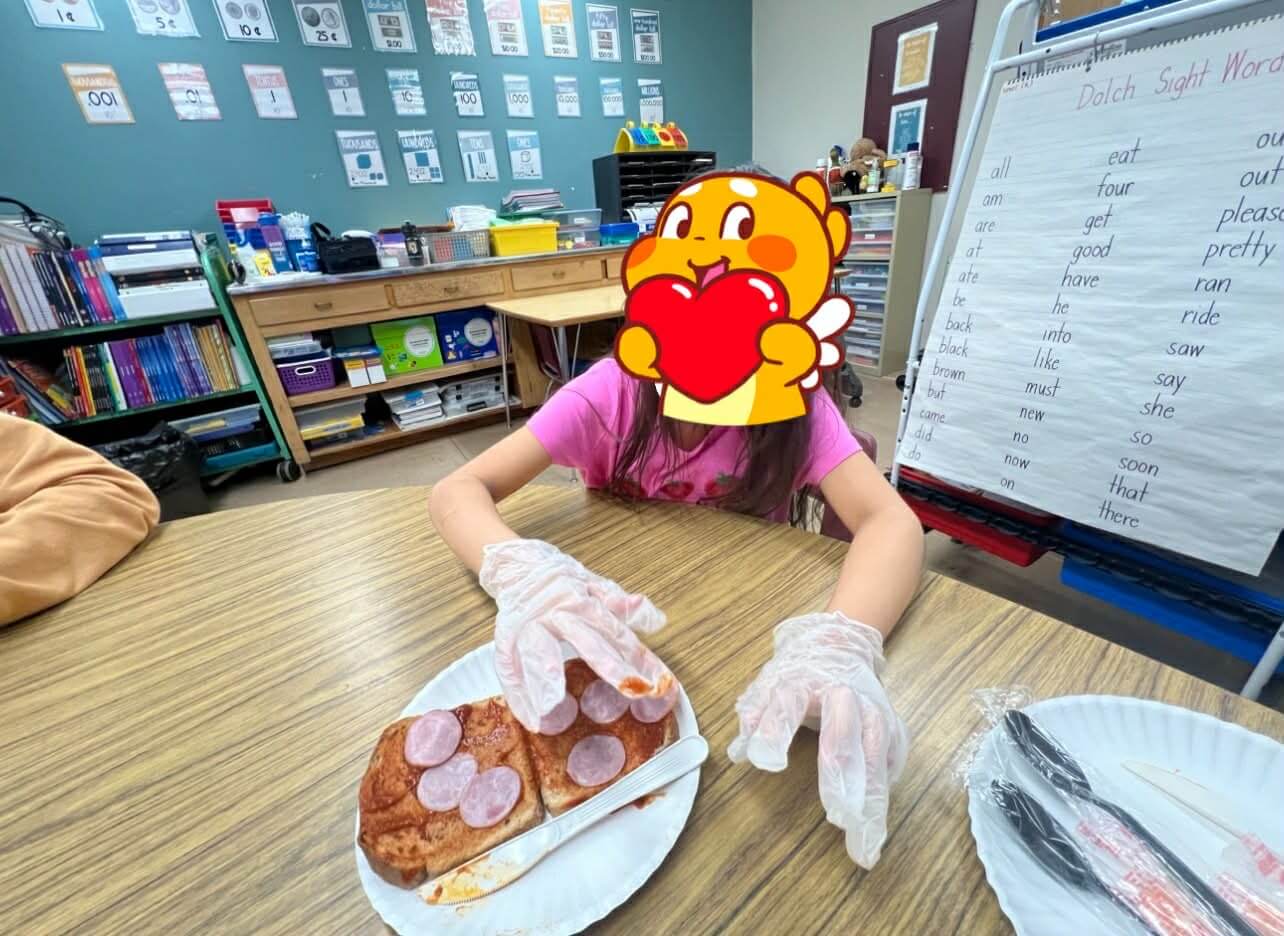
Background Information: Student A is an 8-year old Native American girl diagnosed with Level 3 Autism Spectrum Disorder ( ASD ), indicating that she requires very substantial support. She lives with her family and attends a specialized classroom within a public-school setting.
Teacher Rica has been working with this student for the past two years.
Since Student A has limited speech, the use of the Picture Exchange Communication System (PECS) has been effective in supporting her communication.
Student A continues to wear pull-ups. Her special education teacher has been working on toilet training with her for the past five months. At the beginning of this process, student A often displayed defiant behaviors and cried whenever she was taken to the restroom. Over time, she has shown significant improvement and is now more responsive, cooperative, and appears noticeably happier. She often dances while her teacher helps change her pull-ups, which may be her way of expressing appreciation aswell as comfort and relief.
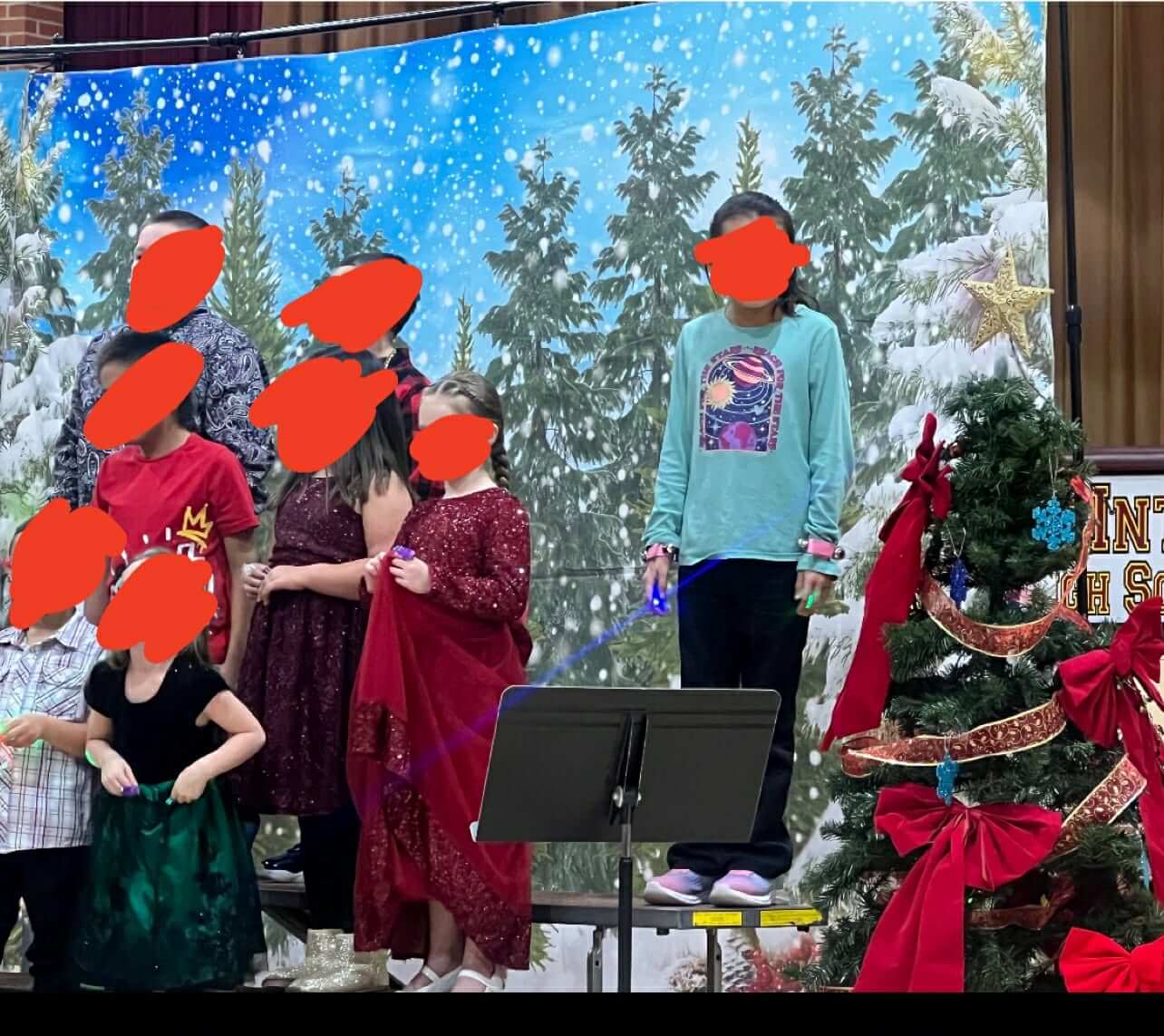
I feel incredibly proud of all she has accomplished this year! For the first time, she was able to join her classmates in the school Christmas concert on December 15, 2025. With plenty of rehearsals, considerable patience, gentle guidance, and practice on the stage, she grew comfortable with the routine and was able to enjoy the experience without getting overwhelmed.
Developmental History: Student A was born full-term with no reported medical complications. Early motor milestones, such as sitting and walking, were achieved within typical age ranges. However, delays became noticeable during toddlerhood, particularly in communication and social engagement. She did not use meaningful words by age two and showed limited response to her name or to social cues from her parents.
Communication and Language: Student A is minimally verbal. She uses a few single words inconsistently and primarily communicates through gestures, vocalizations, and alternative communication methods, such as picture cards. She often requires adult support to express basic needs and wants. Receptive language skills are also delayed, as she has difficulty following verbal instructions without visual prompts.
Social Interaction: Social interaction is significantly limited. Student A rarely initiates interaction with peers or adults and does not engage in reciprocal play. She demonstrates minimal eye contact and limited use of facial expressions. She prefers solitary activities and shows little awareness of others’ emotions or social expectations.
Behavioral Characteristics: Student A exhibits repetitive and restrictive behaviors, including hand-flapping, rocking, and repetitive vocalizations. She demonstrates a strong preference for routines and becomes highly distressed when routines are changed. She has intense, narrow interests, particularly in lining up objects and watching spinning items. Sensory sensitivities are prominent, including aversion to loud noises and certain textures.
Adaptive and Daily Living Skills: Student A requires significant assistance with daily living skills such as dressing, feeding, and toileting. She benefits from structured routines, visual schedules, and consistent adult support to complete tasks. Transitions between activities can be challenging and often require preparation and reinforcement.
Educational and Therapeutic Supports: Student A receives comprehensive support through an Individualized Education Plan (IEP). She is enrolled in a small, structured classroom with a high staff-to-student ratio, commonly referred to as a self-contained classroom. Services include speech therapy focusing on functional communication, occupational therapy targeting sensory regulation and motor skills, and behavioral support to address challenging behaviors and promote adaptive skills.
Summary: Student A’s presentation is consistent with Autism Spectrum Disorder, Level 3, characterized by severe impairments in communication, social interaction, and adaptive functioning. With intensive, individualized supports and consistent intervention, she continues to make gradual progress toward improved communication, regulation, and independence.
Related post: Teaching Kids with Special Needs ( Took the Chance and Loving It! )
Case Study #2
Background Information: Student B is an 11-year-old Japanese – American boy diagnosed with high-functioning Autism Spectrum Disorder (ASD), Level 2. He attends a mainstream public school and is noted for his above-average cognitive abilities and academic performance. Despite his strengths, he experiences challenges related to social communication and flexibility, which impact his interactions and daily functioning. I have been working with this student for only two months now.
Developmental History: Student B was born full-term in the United States with no prenatal or perinatal complications reported. Early physical development milestones such as sitting, crawling, and walking were reached within typical timeframes. His early language development was delayed, with first words emerging around 2.5 years of age. However, by preschool age, he demonstrated strong verbal skills and an extensive vocabulary.
Communication and Language: While Student B’s expressive and receptive language abilities are generally strong, he experiences difficulty with pragmatic language, such as understanding sarcasm, idioms, or the subtleties of conversation. He tends to take language literally and may struggle with back-and-forth conversations, leading to misunderstandings in social contexts.
Social Interaction: Student B faces significant challenges with social reciprocity. He often has difficulty initiating or maintaining friendships and prefers structured or predictable social interactions. He may appear socially awkward, avoid eye contact, and struggle to interpret others’ emotions or social cues. These difficulties sometimes result in feelings of isolation or frustration.
Behavioral Characteristics: Student B exhibits repetitive behaviors and a strong preference for routine. Changes in daily schedules or unexpected events can cause anxiety and distress. He has intense interests in specific topics, such as technology and science, history, dinosaurs, and may engage in focused, detailed discussions about these areas for extended periods.
Cultural Considerations: As a Japanese child, student B’s cultural background influences his social interactions and expectations. His family emphasizes respect, discipline, and academic achievement, which play important roles in his daily routine and behavior. Language and cultural differences also contribute to some of his communication challenges, especially in a multicultural school setting.
Assessment Results
A multidisciplinary evaluation was conducted using standardized tools to identify strengths and areas needing support.
- Autism Diagnostic Observation Schedule, Second Edition (ADOS-2): Results consistent with high-functioning ASD.
- Cognitive Assessment: Above-average intelligence quotient (IQ) scores.
- Speech and Language Evaluation: Strong formal language skills but pragmatic language deficits.
- Occupational Therapy Assessment: Mild sensory sensitivities, particularly to noise and tactile stimuli.
Diagnosis
Student B is diagnosed with High-Functioning Autism Spectrum Disorder, requiring support primarily for social communication and behavioral flexibility.
Intervention Plan
- Applied Behavior Analysis (ABA) Social Skills Training
- Weekly Applied Behavior Analysis (ABA) group sessions focusing on improving social understanding, interpreting nonverbal cues, and developing peer relationships.
- ABA most commonly refers to Applied Behavior Analysis, a therapy widely used for individuals with autism. It is a scientific, evidence-based approach that focuses on improving communication, social, and daily living skills by reinforcing positive behaviors and reducing harmful ones. ABA uses individualized plans, behavior analysis, and positive reinforcement to help individuals become more independent and successful in everyday life. Student B currently receives ABA services twice a week after school, as he also receives Speech, OT, and Special Education services during school hours.
2. Speech and Language Therapy
- Targeted support to enhance pragmatic language skills and improve conversational abilities.
- Behavioral Support
- Strategies to manage anxiety related to changes in routine and to increase coping skills during unexpected events.
- 4. Educational Support
- Accommodations in the classroom such as clear instructions, visual schedules, and access to a supportive special education teacher.
Summary:
Student B’s profile exemplifies a high-functioning individual on the autism spectrum, with notable strengths in cognitive and formal language skills balanced by challenges in social communication and flexibility.
Through tailored supports addressing social, communication, and behavioral needs, he is supported in maximizing his potential academically and socially, while navigating the complexities of his cultural environment and developmental profile.
Proven Approaches for Supporting Students with Autism Spectrum Disorder:
1) Connection– Always teach with compassion and focus on building a strong teacher-student relationship. Once that connection is established, everything else naturally falls into place. From my personal experience, this approach has been tried and proven effective over my 13 years of teaching in special education.
2) Structured Environment– Use clear routines and predictable schedules. Provide visual schedules and step-by-step instructions. Personally, I like using pictures of my students completing assigned activities to personalize their routine charts, and they enjoy seeing themselves included in their daily schedule.
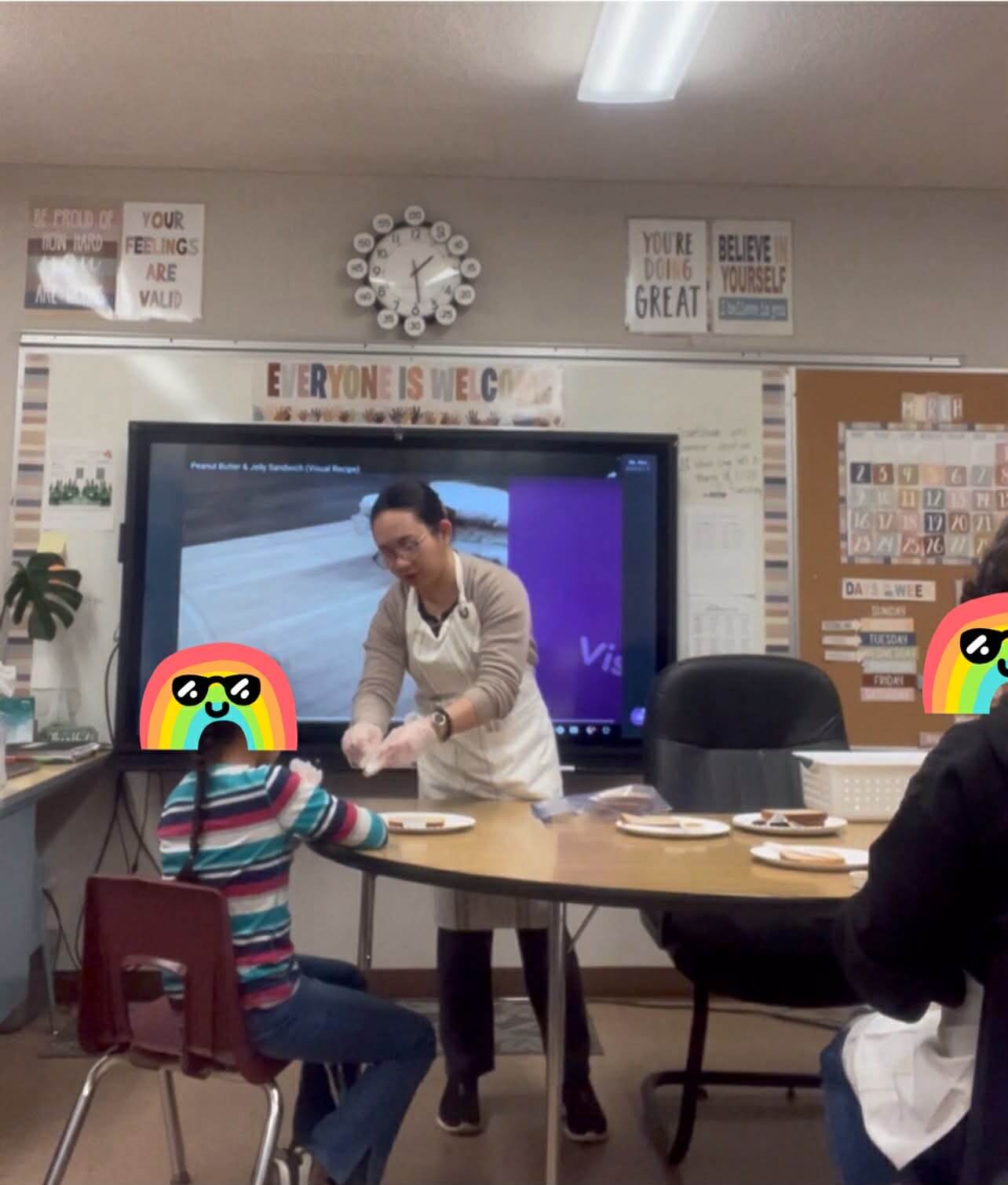
3) Clear Communication– Use simple, concise language. Pair verbal instructions with visual cues or gestures. Encourage alternative communication methods, such as picture cards or apps. For the past few years, I have been using the Go Talk Now Lite App with my students with ASD, it’s free and user-friendly.
4) Tone of voice- The teacher’s tone of voice plays a crucial role when teaching students with autism. Speak in a warm, lively manner so they feel loved and cared for, students with autism can truly sense and respond to these feelings. If a student’s behavior seems manipulative or like they’re testing you during your first interactions, remain firm yet calm and grounded.
5) Social Skills Support- Model and teach appropriate social behaviors. Use role-playing or social stories to explain social situations. Encourage peer interactions in structured settings. Additionally, I ensure that social stories are incorporated when teaching social and emotional skills to my students with autism, as they find it easier to relate to these scenarios compared to traditional teaching methods.
6) Positive Behavior Support– Reinforce desirable behaviors consistently. Use clear expectations and consistent consequences. Break tasks into smaller, manageable steps using pictures and words, as students with autism often think visually and prefer concrete, clear instructions.
7) Sensory Considerations– Identify and accommodate sensory sensitivities (e.g., noise, textures, lighting). In our resource room (special education classroom), the lights are equipped with adjustable buttons that allow us to control the brightness of the bulbs. Provide sensory breaks or a quiet space when necessary; even a short 5 to 10-minute walk in the hallway can help regulate the student’s mood.
Related post : Weighted Blanket ( review ) – for Autism Meltdown
8) Academic Supports– Adapt lessons to match the student’s learning style and strengths. Provide visual aids, hands-on activities, and clear examples. For my students with ASD who have a short attention span or difficulty remaining seated, I usually provide a break after completing a task and incorporate sensory integration activities involving movement, such as walking up and down stairs or taking a 5-10 minute walk in the hallway to help meet their sensory needs as needed.
9) Collaboration and Consistency– Work closely with parents, therapists, and other educators. Maintain consistent strategies across home and school environments. Providing praise and positive affirmation through post-it notes to students or sending them to parents to highlight positive actions at school can make a significant impact. I usually give these praise and positive affirmation post-it notes at least three times a week, or right away when I see the student displaying positive behavior, and they really enjoy it.
Related post: How to help Autistic children-Become an Autism Tutor
10) Encourage Strengths and Interests– Integrate the student’s special interests into lessons to increase engagement. It’s important to notice and celebrate a student’s achievements, no matter how big or small. Even small actions, such as completing a task, following a new instruction, or simply hearing “Great job, I’m so proud of you”, are worth acknowledging. Celebrating these successes helps students feel proud, stay motivated, and gain confidence in their abilities. It also helps create a positive environment where students feel valued and supported, which is extremely important.
Conclusion:
These strategies are designed especially for SPED teachers to support communication, enhance social interaction, improve academic performance, and promote overall well-being for students with Autism Spectrum Disorder.
I hope this article provides you with useful insights.
Follow Teacher Rica in Facebook
For our SPED teachers, how do you handle your students with autism, so they learn the best from you?






Thank you for this useful information on teaching autistic children. And it’s amazing how different they all are depending on where they are on the spectrum.
I teach dance, and I find with these children, visual aids really work well and using props in the classroom. Also keeping your voice changing so that they don’t get bored or lose interest also helps. Keeping them moving and not standing in one place too long is also great to keep them focused. This works for mainstream kids as well.
Hi Michel,
Thanks a lot for your practical tips.
A dedicated teacher like you, really knows how to engage properly with their students.
Cheers,
Marita
Hi Michel,
Absolutely, I agree! In my classes, I like to give students brain or sensory breaks such as providing a 5–10 minute walk in the hallways, coloring activity, dancing, or a visit to the sensory room to play on the swing or balance ball. It really helps them stay awake and regulated.
– Teacher Rica
Thank you for writing this in such a clear and compassionate way. As a mom trying to better understand how autism affects a child’s experience in school, this really helped put words to things I see every day but sometimes struggle to explain. The part about sensory overload, communication differences, and how these can be mistaken for “behavior issues” hit especially close to home.
What parents often carry quietly is how exhausting it can be to constantly advocate; explaining our child again and again, hoping teachers truly see them and not just their challenges. I appreciate how this post shifts the focus from awareness to real support, because that’s what makes the biggest difference for both kids and families. How do you suggest parents and teachers can build stronger partnerships so that support feels consistent instead of reactive?
Hi Celia,
As a parent, I also appreciate the SPEd teachers a lot, for their patience and dedication in teaching their students, especially kids with autism, who can be challenging especially if they are non-verbal.
Open communication between teachers and parents is the key to bringing the best to these kids, be it academically and behavior-wise.
Thanks for your wonderful comments.
Marita
Hi Celia,
This is Teacher Rica. No matter how hectic the day gets, I do my best to keep parents informed about their child’s progress, both the struggles and the wins. I stay connected with families by calling them or sending home simple updates on colored sticky notes. Those connections mean a lot to families.
This was a fascinating read, especially Case Study #2. I rarely see articles that touch on how cultural background (like Student B’s Japanese heritage) intersects with Autism diagnosis and behavior.
I’d love to know more: Do you find that cultural expectations of ‘discipline’ or ‘quietness’ sometimes delay a diagnosis because parents might think the child is just being ‘well-behaved’ or ‘shy’ rather than noticing the social withdrawal? It seems like a tricky balance for educators to navigate.
Hi Adrian,
Thanks for your comments. Im not an educator, but a parent. Being with your growing up child everyday, there would be other factors that you observe in him to make you think that there’s a problem or issue that needs to be addressed. It’s not a cultural thing, I believe but how your child develops.
But yes, interaction might be affected with cultural norms and how the child was raised at home, thus teachers have to look into this.
Cheers,
Marita
Hi Adrian,
This is Teacher Rica. I concur, cultural norms that value quietness or good behavior can sometimes hide signs of social or developmental challenges, which may delay diagnosis. Educators need to balance respecting family values while carefully observing student needs, using specific examples and supportive, collaborative communication to promote early intervention. I believe early intervention is more important than anything else.
If you have any other questions, you’re welcome to reach out here or directly on my Facebook page (Ms. R17’s Unfiltered Special Education Chronicles). Thanks!